

Educational, Industry News
Texas’ 2026 Election: What the Public Record Shows About Cannabis and Hemp Policy
September 09, 2026
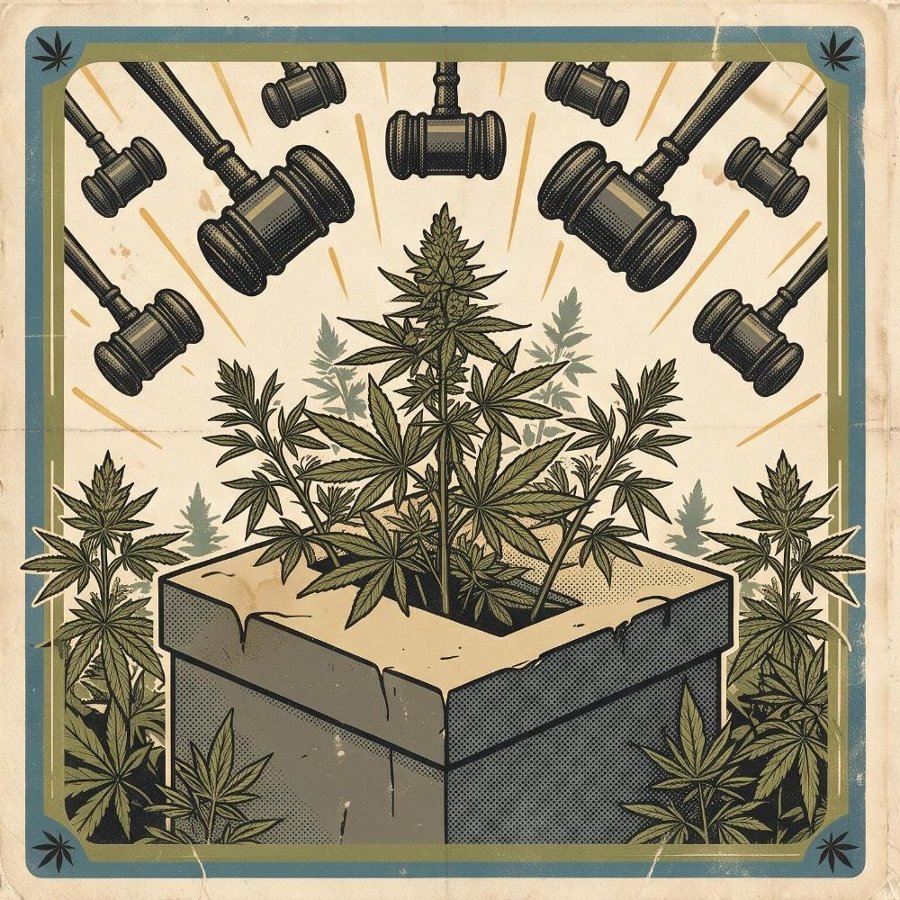
Texas’ 2026 Election: What the Public Record Shows About Cannabis and Hemp Policy
Prepared August 28, 2026 for the November 3, 2026 General Election
Texas Voters
Cannabis policy is not a single yes-or-no issue. A candidate may support medical access but oppose adult-use legalization. Another may oppose legalization while supporting a regulated market for hemp-derived products. A third may support legalization but favor strict limits on intoxicating hemp products. Texas makes those distinctions especially important.
In 2025 alone, lawmakers debated a prohibition on intoxicating hemp products, expanded the state’s medical-cannabis program, considered adult-use legalization and decriminalization proposals, and returned to Austin during a special session to continue debating hemp policy.
This guide separates those issues and reports dated, verifiable actions. It is intended for educational purposes only and is not an endorsement of, or opposition to, any candidate or political party.
The political and legislative landscape surrounding cannabis and hemp remains fluid. Candidates may clarify, modify, or change their positions before Election Day, and legislative or regulatory developments may alter the policy landscape. This guide reflects the public record available as of August 28, 2026.
How to Read This Guide
- Bill sponsorship is reported as sponsorship. It shows that a candidate placed their name on a particular proposal. It does not necessarily establish the candidate’s position on every later amendment or on every cannabis-related issue.
- Votes are tied to a date and version. Cannabis and hemp bills frequently change as they move between chambers.
- A procedural vote is not treated as a substantive policy vote.
- “No position located” does not mean opposition or support. It means that no sufficiently reliable, current position was found in the sources reviewed as of August 28, 2026.
- Federal and state positions are not interchangeable. Supporting federal rescheduling or descheduling, for example, does not necessarily establish support for a particular Texas legalization bill.
- Older questionnaire responses should be treated as historical records. They should not be presented as current 2026 positions unless the candidate has reaffirmed them.
- Candidate positions may change. The Texas cannabis and hemp landscape remains unusually fluid. Candidates may clarify, modify, or change their positions before Election Day.
Texas voters have a lot to decide.
The 2026 Election
Texas voters will choose candidates for federal, statewide, judicial and legislative offices on November 3, 2026.
Offices on the election calendar include:
- One U.S. Senate seat
- All 38 U.S. House seats
- Governor
- Lieutenant Governor
- Attorney General
- Comptroller of Public Accounts
- Commissioner of the General Land Office
- Commissioner of Agriculture
- One Railroad Commissioner
- Texas Supreme Court seats
- Texas Court of Criminal Appeals seats
- Eight State Board of Education seats
- Sixteen regularly scheduled Texas Senate seats
- All 150 Texas House seats
- Courts of Appeals seats and other judicial offices; and
- Additional county and local offices.
Special elections for Texas Senate District 22 and Texas House District 93 are also scheduled for November 3, 2026.
The Texas Secretary of State describes its list of offices as preliminary and subject to change.
This guide does not identify a current cannabis or hemp position for candidates not listed in a particular section based on the sources reviewed as of August 28, 2026.
Texas’ Current Legal Landscape
Texas does not presently have a statewide adult-use cannabis market.
The state does, however, have the Texas Compassionate-Use Program, which permits qualifying patients to obtain low-THC cannabis through licensed dispensing organizations.
Texas also permits federally lawful hemp and consumable hemp products subject to state regulation. The legality and regulation of intoxicating hemp-derived products became one of the state’s most contested cannabis-policy issues during the 2025 legislative sessions.
Four distinct policy questions are particularly relevant:
- Regulation or prohibition of hemp-derived cannabinoid products
- Medical access to cannabis
- Adult-use legalization; and
- Decriminalization and expunction of prior offenses.
Hemp-Derived Products: Senate Bill 3
Senate Bill 3 became the central hemp-policy measure of the 2025 regular legislative session. The Senate initially passed SB 3 on March 19, 2025, by a vote of 26–5. After amendments in the House, the House passed the measure 87–54 on May 22. The Senate concurred in the House amendments on May 25 by a vote of 25–6.
The enrolled bill would have substantially restricted consumable hemp products containing cannabinoids other than CBD and CBG and established new licensing, enforcement and criminal provisions. Governor Greg Abbott vetoed SB 3 on June 22, 2025. The veto prevented SB 3 from becoming law.
The veto that changed the conversation. The legislature passed it. The governor vetoed it.
Governor Abbott and SB 3
Governor Greg Abbott’s veto is one of the clearest current records held by a 2026 statewide candidate on Texas hemp policy.
Abbott did not frame his veto as opposition to hemp regulation. Instead, he called for a regulatory framework that would address intoxicating hemp products while avoiding the legal concerns he identified with SB 3. The issue was subsequently placed on the agenda for a special legislative session. That distinction matters: a veto of SB 3 should not be characterized as opposition to regulating intoxicating hemp products generally.
Governor Abbott is the Republican candidate for reelection in 2026.
The 2025 Special Sessions
The hemp debate did not end with the SB 3 veto.
Governor Abbott called lawmakers back into special session beginning July 21, 2025, with regulation of consumable hemp products included on the agenda.
During the first called session, Senate Bill 5 proposed another major restriction on THC in consumable hemp products. The Senate passed the measure, but it did not complete the legislative process before the session ended.
The Legislature again considered hemp policy during the second called session.
After lawmakers did not enact the comprehensive regulatory framework sought during the special sessions, Governor Abbott issued an executive order in September 2025 directing state agencies to take regulatory actions concerning hemp-derived products.
Among other measures, the order directed agencies to begin rulemaking concerning:
- Sales to persons under 21
- Age verification
- Testing
- Labeling; and
- Measurement of total delta-9 THC, including THCA conversion.
The executive action did not create the comprehensive statutory framework debated by lawmakers.
The ban failed. The regulatory fight didn't.
Who put their name on the hemp restrictions?
Verified Sponsorship of SB 3
The following sponsorship records relate specifically to SB 3 from the 2025 regular session. They should not be expanded into claims about every aspect of cannabis or hemp policy.
Senate Bill 3
Author: Charles Perry
Coauthors: Paul Bettencourt; Donna Campbell; Brandon Creighton; Brent Hagenbuch; Bob Hall; Angela Paxton; Charles Schwertner; Kevin Sparks.
The House sponsor was Ken King.
Because the legislation changed during the legislative process, sponsorship should be reported separately from votes on later versions of the bill.
House Bill 46
Texas took a materially different approach to medical cannabis during the same legislative session.
House Bill 46 expanded the Texas Compassionate-Use Program.
Among other provisions, the legislation:
- Expanded the medical conditions for which low-THC cannabis may be prescribed
- Expanded the number of licensed dispensing organizations
- Permitted dispensing organizations to operate satellite locations
- Expanded access geographically
- Authorized certain pulmonary inhalation methods under specified circumstances; and
- Revised rules governing prescriptions, packaging and dispensing.
The House initially passed HB 46 by a vote of 122–21 on May 13, 2025.
The Senate passed an amended version 31–0 on May 27.
After conference, the House adopted the conference report 138–1 and the Senate adopted it 31–0 on June 1.
Governor Abbott signed HB 46 on June 20, 2025.
It became effective September 1, 2025.
Medical cannabis didn't just get debated. It became law.
Who put their name on medical expansion?
Verified HB 46 Sponsorship Records
House Authors and Coauthors
HB 46 was authored by Ken King.
Joint authors included Joe Moody, Tom Oliverson, Mihaela Plesa and Suleman Lalani.
Coauthors included Drew Darby, Jessica González, Andy Hopper, Marc LaHood, Suleman Lalani, Penny Morales Shaw, Matt Morgan, Katrina Pierson and Ron Reynolds.
Senate Sponsorship
Charles Perry sponsored HB 46 in the Senate.
Senate cosponsors included Carol Alvarado, Paul Bettencourt, César Blanco, Donna Campbell, Pete Flores, Roland Gutierrez, Bob Hall, Adam Hinojosa, Juan “Chuy” Hinojosa, Nathan Johnson, Lois Kolkhorst, José Menéndez, Borris Miles, Kevin Sparks and Royce West.
These records establish sponsorship of the medical-cannabis legislation. They do not necessarily establish a position on adult-use legalization or hemp-derived THC.
Adult-Use Cannabis:
Texas lawmakers also introduced legislation that would have gone substantially further than the medical program.
House Bill 1208 — Regulation of Cannabis
HB 1208, authored by Jessica González of Dallas, proposed a regulated adult-use cannabis market.
The bill would have authorized adults 21 and older to possess limited amounts of cannabis, created a licensing system for cannabis businesses, established testing and regulatory requirements and imposed a cannabis sales tax.
The bill did not become law.
Senate Bill 335
SB 335, authored by Sarah Eckhardt, proposed regulation of the cultivation, manufacture, distribution, sale, possession and use of cannabis and cannabis products through a licensed system.
The bill was referred to Senate State Affairs and did not become law.
House Bill 5307
HB 5307, authored by James Talarico, proposed another comprehensive regulated cannabis market and included provisions concerning expunction of records related to certain decriminalized conduct.
The bill was referred to House Licensing & Administrative Procedures and did not receive final legislative approval.
Medical access, hemp regulation and adult-use legalization are three different records.
Two Statewide Candidates Have Particularly Clear Legalization Records.
James Talarico — U.S. Senate
James Talarico is the Democratic candidate for U.S. Senate in 2026.
As a Texas House member, Talarico authored HB 5307 in 2025.
The proposal would have established a regulated adult-use cannabis system for adults 21 and older, including cultivation, processing, distribution, testing, retail sales, taxation and licensing. It also included expunction provisions concerning certain cannabis-related conduct.
This sponsorship is a verified legislative record supporting a regulated adult-use framework.
Because Talarico is now running for federal office, that state legislative record should not automatically be treated as establishing his position on every federal cannabis proposal.
Sarah Eckhardt — Comptroller of Public Accounts
Sarah Eckhardt is the Democratic candidate for Texas Comptroller in 2026.
As a Texas senator, Eckhardt authored SB 335 in 2025.
The measure proposed a regulated system for the cultivation, manufacture, processing, distribution, sale, testing, transportation, possession and use of cannabis and cannabis products.
This sponsorship is a verified legislative record supporting a regulated adult-use framework.
House Bill 3242
HB 3242, authored by Joe Moody, addressed criminal and licensing consequences associated with possession of marijuana, certain THC products, synthetic cannabinoids and drug paraphernalia.
Among other provisions, the proposal would have required citation rather than arrest for specified low-level possession offenses.
The bill should therefore be described as a decriminalization or criminal-justice proposal rather than as an adult-use legalization bill.
It did not establish a regulated commercial adult-use cannabis market.
LEGALIZATION AND DECRIMINALIZATION ARE NOT THE SAME THING.
Statewide offices matter too.
The 2026 Statewide Landscape
The major statewide races include:
Governor
Greg Abbott — Republican
Abbott vetoed SB 3 in 2025 and subsequently called lawmakers into special session to address hemp regulation. He later issued an executive order directing agencies to implement age, testing and labeling protections concerning hemp-derived products.
Gina Hinojosa — Democratic
Any legislative votes or sponsorship records from Hinojosa’s service in the Texas House should be reported individually and should not be generalized beyond the specific measure.
Lieutenant Governor
Dan Patrick — Republican
As lieutenant governor and presiding officer of the Texas Senate, Patrick publicly advocated strong restrictions on intoxicating THC hemp products during the 2025 debate. His role should be distinguished from individual senators’ recorded votes.
Vikki Goodwin — Democratic
Any cannabis or hemp position should be tied to a dated legislative vote, sponsorship or current campaign statement rather than inferred from party affiliation.
Attorney General
Mayes Middleton — Republican
Middleton’s legislative record should be evaluated bill by bill, including his participation in the Texas Senate during the 2025 cannabis and hemp debates.
Nathan Johnson — Democratic
Johnson’s legislative record should likewise be evaluated bill by bill rather than characterized by party affiliation.
Comptroller
Sarah Eckhardt — Democratic
Eckhardt authored SB 335, a 2025 adult-use cannabis regulation proposal.
Don Huffines — Republican
Any current cannabis or hemp position should be based on a current statement or other sufficiently reliable record rather than inferred from party affiliation or prior officeholding.
The same standard should be applied to candidates for Commissioner of Agriculture, Commissioner of the General Land Office, Railroad Commissioner and statewide judicial offices.
Judicial candidates require a different standard.
Texas Judicial Elections
Texas voters will also elect members of the Texas Supreme Court, Court of Criminal Appeals and Courts of Appeals.
This guide does not infer a judicial candidate’s current position on cannabis or hemp policy from:
- Party affiliation
- A ruling in an unrelated criminal case
- Prior legislative service alone
- A client represented before becoming a judge
- General statements about criminal justice.
A prior legislative vote may be reported as historical fact when relevant, but it should not automatically be characterized as the candidate’s present judicial or policy position.
Judges decide cases under existing law. They do not perform the same policymaking role as legislators or executive officials.
What Legislative Votes Tell Us
Texas’ 2025 record illustrates why broad “pro-cannabis” and “anti-cannabis” labels can be misleading.
A legislator could, for example:
- Vote to restrict intoxicating hemp
- Vote to expand medical cannabis
- Oppose adult-use legalization; and
- Support reduced criminal penalties for possession.
Those positions are not inherently contradictory because they concern different policy questions.
This guide therefore reports individual legislative actions rather than assigning candidates a single cannabis score.
One voted doesn't tell you everything. But it tells you something.
Sponsorship ≠ a blanket position.
A candidate’s sponsorship of a cannabis or hemp bill establishes support for putting their name on that particular proposal.
It does not necessarily establish:
- Support for every amendment;
- Support for a later conference version
- Support for another cannabis bill
- Support for federal legalization
- Opposition to all hemp products; or
- Support for unrestricted cannabis access.
Likewise, voting against a restrictive hemp bill does not necessarily mean a candidate supports adult-use cannabis legalization.
Don't read between the lines.
What This Guide Does Not Infer
This guide does not treat any of the following as conclusive evidence of a current Texas cannabis-policy position:
- A blank record in a candidate table
- Party affiliation
- A federal rescheduling or descheduling position
- A position on federal hemp legislation
- A record from another state
- Prior legislative service by a judicial candidate
- An undated social-media statement
- An older questionnaire response that has not been reaffirmed; or
- Support or opposition to one cannabis-related bill as establishing a position on every cannabis-related issue.
Candidates not listed in a particular section should therefore be described as having “no position located in the sources reviewed as of August 28, 2026,” rather than as supporting or opposing the policy.
No record doesn't mean no. And it doesn't mean yes.
Texas cannabis policy changed repeatedly during 2025.
A major hemp bill passed both chambers and was vetoed. The Legislature returned for special sessions. Additional hemp restrictions were debated. The governor subsequently acted through executive order. Meanwhile, lawmakers overwhelmingly approved an expansion of the state’s medical-cannabis program.
The 2027 regular legislative session will begin after the 2026 election, meaning the officials Texans elect in November may determine what happens next.
Candidate statements can also change between publication and Election Day.
For that reason, this guide should be updated immediately before publication and checked again shortly before November 3.
Before you cast your ballot.
Before Voting
Voters should confirm their district, candidates and sample ballot through the Texas Secretary of State.
The most useful question to ask a candidate is not simply whether they support “cannabis reform.”
Ask which specific policy they support:
- What should Texas do with intoxicating hemp-derived cannabinoid products?
- Should federally lawful hemp products remain available to adults?
- What age, testing, labeling and licensing requirements should apply?
- Should Texas further expand its Compassionate-Use Program?
- Should adults be permitted to possess cannabis?
- Should Texas establish a regulated adult-use market?
- Should low-level marijuana possession remain a criminal offense?
- Should past low-level marijuana offenses be eligible for expunction?
Specific questions produce more useful answers than broad political labels.
The record is public. The position is yours.
Prepared and published by Arete. Reviewed for legal and factual accuracy by Kight Law Office PC. This guide is intended for educational purposes and is not authorized by any candidate, candidate committee or political party.
Comment on "Texas’ 2026 Election: What the Public Record Shows About Cannabis and Hemp Policy"