
Educational, Industry News
North Carolina’s 2026 Election: What the Public Record Shows About Cannabis and Hemp Policy
September 02, 2026
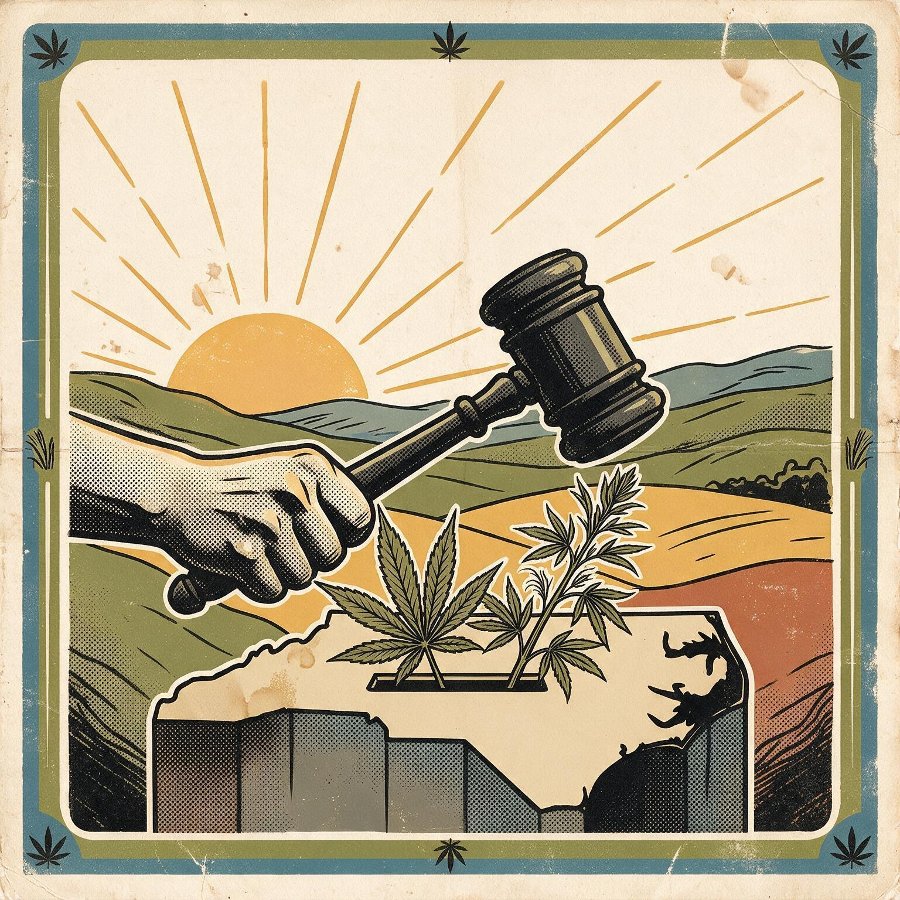
North Carolina’s 2026 Election: What the Public Record Shows About Cannabis and Hemp Policy
Prepared August 24, 2026 for the November 3, 2026 General Election
North Carolina’s cannabis and hemp policy landscape is changing quickly. Bills evolve, candidates clarify or change positions, and legislative records can shift between publication and Election Day.
North Carolina Voters
Cannabis policy is not a single yes-or-no issue. A candidate may support medical access but oppose adult-use legalization. Another may oppose legalization while supporting a regulated market for hemp-derived products. A third may support legalization but favor strict limits on intoxicating hemp products.
This guide separates those issues and reports dated, verifiable actions. It is intended for educational purposes only and is not an endorsement of, or opposition to, any candidate or political party.
This guide is a snapshot of the public record as of August 24, 2026, not a prediction of where any candidate will ultimately stand.
How to Read This Guide
- Bill sponsorship is reported as sponsorship. It shows that a candidate placed their name on a particular proposal. It does not necessarily establish the candidate’s position on every later amendment or on every cannabis-related issue.
- Votes are tied to a date and version. Cannabis and hemp bills frequently change as they move between chambers.
- A procedural vote is not treated as a substantive policy vote.
- “No position located” does not mean opposition or support. It means that no sufficiently reliable, current position was found in the sources reviewed as of August 24, 2026.
- Federal and state positions are not interchangeable. Supporting federal descheduling, for example, does not necessarily establish support for a particular North Carolina legalization bill.
- Older questionnaire responses should be treated as historical records. They should not be presented as current 2026 positions unless the candidate has reaffirmed them
- Candidate positions may change. The political and legislative landscape surrounding cannabis and hemp remains fluid. Candidates may clarify, modify, or change their positions before Election Day. This guide reflects the public record available as of August 24, 2026.
228 contests. 409 candidates. One election.
The 2026 Election
North Carolina voters will choose candidates in 228 federal, state, judicial, legislative, and district-attorney contests covered by this guide:
- One U.S. Senate seat;
- Fourteen U.S. House seats;
- One N.C. Supreme Court seat;
- Three N.C. Court of Appeals seats;
- Fifty N.C. Senate seats;
- 120 N.C. House seats; and
- Thirty-nine district-attorney districts.
The State Board of Elections list generated August 24, 2026, contains 409 candidates across those contests. Candidate lists remain subject to change, so all totals should be checked again immediately before publication. This guide does not identify a current position for candidates not listed in a particular section based on the sources reviewed as of August 24, 2026.
North Carolina’s Current Legal Landscape
North Carolina does not presently have a statewide regulated medical-cannabis or adult-use cannabis market. An important tribal-law exception exists on the Qualla Boundary, where the Eastern Band of Cherokee Indians exercises sovereign authority over cannabis policy.
Four distinct policy questions are currently relevant:
- Regulation or prohibition of hemp-derived cannabinoid products;
- Medical access to cannabis;
- Adult-use legalization; and
- Decriminalization and expunction of prior offenses.
Four different policy questions. Four very different positions.
Hemp-Derived Products: House Bill 328
HB 328 is a significant pending hemp measure. The House passed an earlier version in 2025. After the Senate substantially revised the bill, the House voted 95–18 on April 21, 2026, not to concur in the Senate substitute. That vote sent the measure to conference and is best understood as a procedural vote rather than a vote for or against the final restrictions.
On July 2, 2026, the Senate adopted the conference report by a vote of 37–6. The conference report was referred to House Rules on July 30. The official legislative history does not identify a date for a future House vote.
Among other provisions, and focusing on the hemp provisions relevant to this guide, the conference report would:
- Replace the state’s delta-9-only hemp standard with a total-THC standard;
- Treat a final-form product intended for ingestion or inhalation as prohibited if it contains more than 0.4 milligrams of total THC per innermost retail container;
- Prohibit final-form ingestible or inhalable products containing synthetic or chemically converted cannabinoids;
- Prohibit the sale or delivery of defined hemp-derived consumable products to anyone under 21;
- Prohibit possession of those products by anyone under 21;
- Establish criminal and civil penalties.
**The conference report uses different proposed effective dates. Section 1 provisions are drafted to become effective November 12, 2026. Section 2 provisions are drafted to become effective July 15, 2026.
Products intended for topical application and certain generally recognized-as-safe seed and seed-derived ingredients are excluded from the definition of a hemp-derived consumable product.
Medical Cannabis
House Bill 1011
HB 1011, the North Carolina Compassionate Care Act, was referred to House Rules on April 16, 2025. It has not received a floor vote. Current 2026 candidates listed as sponsors are:
- Zack Hawkins — Democratic, House District 31;
- Mary Price “Pricey” Harrison — Democratic, House District 61; and
- Aisha O. Dew — Democratic, House District 107.
Prior Senate Action
In 2023, the Senate passed S 3, another version of the North Carolina Compassionate Care Act, by a vote of 36–10. The bill did not receive final House approval.
Current 2026 candidates who sponsored that 2023 measure include Bill Rabon, Michael Lee, Paul Lowe Jr., Gale Adcock, Danny Britt Jr., Amy Scott Galey, Lisa Grafstein, Michael Anthony Lazzara, and Joyce Waddell. Because this is a 2023 record, it should be described as historical unless the candidate has reaffirmed the position during the current campaign.
Legalization isn’t one proposal.
Adult-Use (“Recreational”) Cannabis
Three pending measures address adult possession or adult-use policy, but they take different approaches.
House Bill 413 — Marijuana Legalization and Reinvestment Act
H 413 would legalize and regulate cannabis for adults 21 and older. Among other provisions, it would establish possession limits of two ounces of cannabis, 15 grams of concentrate, products containing up to 2,000 milligrams of THC, and six plants. It would impose a 30% state retail excise tax and provide automatic expunction for certain marijuana offenses. The bill has remained in House Rules since March 18, 2025.
Senate Bill 350 — Marijuana Justice and Reinvestment Act
S 350 is a separate Senate legalization proposal. It contains possession limits similar to H 413, but it uses the North Carolina Alcoholic Beverage Control Commission as the principal regulator, imposes a manufacturer-level tax based on total THC content rather than a 30% retail tax, and includes a separate medical-cannabis program. The bill has remained in Senate Rules since March 20, 2025.
Senate Bill 1072 — Proposed Constitutional Amendments
S 1072 would submit two proposed constitutional amendments to voters if three-fifths of all members of each chamber first approve the act, as required by the North Carolina Constitution:
- One amendment would protect possession of limited amounts of cannabis for personal use, subject to conditions enacted by the General Assembly.
- The second would protect possession for medical use by patients with qualifying conditions, again subject to implementing legislation.
S 1072 would not itself establish a regulated adult-use retail market. It has remained in Senate Rules since May 5, 2026.
Verified Candidate Records on Adult-Use Measures
The following records are based on official bill sponsorship. They should not be expanded into broader claims about every aspect of cannabis policy.
Measure current 2026 candidates with a verified sponsorship record:
H 413
Allison A. Dahle (D-11); Deb Butler (D-18); Rodney D. Pierce (D-27); Zack Hawkins (D-31); James A. Roberson (D-39); Maria Cervania (D-41); Frances Jackson (D-45); Renee A. Price (D-50); Tracy Clark (D-57); Mary Price “Pricey” Harrison (D-61); Sarah Crawford (D-66); Mary Belk (D-88); Aisha O. Dew (D-107); Jordan Lopez (D-112); Eric Ager (D-114); Lindsey Prather (D-115); Brian Turner (D-116)
S 350
Kandie D. Smith (D-5); Jay J. Chaudhuri (D-15); Natalie S. Murdock (D-20); Sophia Chitlik (D-22); DeAndrea Salvador (D-39); Caleb Theodros (D-41)
S 1072
Kandie D. Smith (D-5); Paul Lowe Jr. (D-32); Joyce Waddell (D-40); Caleb Theodros (D-41)
The party and district designations reflect the August 24 State Board of Elections candidate list.
Verified Senate Record on the HB 328 Conference Report
The July 2, 2026, Senate vote is the clearest current candidate record on the pending HB 328 conference report.
Current candidates who voted for the conference report:
Democratic senators: Dan Blue (D-14); Jay J. Chaudhuri (D-15); Gale Adcock (D-16); Sydney Batch (D-17); Val Applewhite (D-19); Michael K. Garrett (D-27); Paul Lowe Jr. (D-32); Joyce Waddell (D-40); Woodson Bradley (D-42); Julie Mayfield (D-49).
Republican senators: Norman Sanderson (R-2); Bob Brinson (R-3); Buck Newton (R-4); Michael Anthony Lazzara (R-6); Michael Lee (R-7); Bill Rabon (R-8); Brent Jackson (R-9); Benton Sawrey (R-10); Lisa Stone Barnes (R-11); Jim Burgin (R-12); Tom McInnis (R-21); Amy Scott Galey (R-25); Dave Craven (R-29); Steve Jarvis (R-30); Dana Caudill Jones (R-31); Carl Ford (R-33); Todd Johnson (R-35); Eddie Settle (R-36); Brad Overcash (R-43); Ted Alexander (R-44); Mark Hollo (R-45); Warren Daniel (R-46); Ralph Hise (R-47); Tim Moffitt (R-48); Kevin Corbin (R-50).
Current candidates who voted against the conference report:
Kandie D. Smith (D-5); Lisa Grafstein (D-13); Natalie S. Murdock (D-20); Sophia Chitlik (D-22); DeAndrea Salvador (D-39); Caleb Theodros (D-41).
Current candidates who did not cast a substantive vote:
Haseeb Fatmi (D-18), Danny Earl Britt Jr. (R-24), Gladys A. Robinson (D-28), Vickie Sawyer (R-37), and Mujtaba A. Mohammed (D-38) were recorded as excused absences. Jonah Garson (D-23) was recorded as having an excused vote.
These descriptions report only the July 2 vote. They do not establish a candidate’s position on medical cannabis, adult-use legalization, or every alternative hemp-regulation proposal.
Current House Candidates Currently Listed as Sponsors of HB 328:
The sponsor roster changed during the legislative process and the list reflects the NCGA sponsor listing as of August 24, 2026.
Bill Ward (R-5); Timothy Reeder (R-9); Donna McDowell White (R-26); Tim Longest (D-34); Ben Moss (R-52); Alan Branson (R-59); David Willis (R-68); Brian Biggs (R-70); Donny C. Lambeth (R-75); Neal Jackson (R-78); Larry W. Potts (R-81); Jeffrey C. McNeely (R-84); Carolyn G. Logan (D-101); Tricia Ann Cotham (R-105); Donnie Loftis (R-109); Paul Scott (R-111).
Because HB 328 changed substantially during the legislative process, sponsorship of the bill should not be described as a recorded vote on the current conference report.
Other Verified Hemp-Bill Sponsorships
Several other pending bills would regulate hemp-derived products in different ways. The following list reports sponsorship without labeling the candidates broadly as “pro-hemp” or “anti-hemp.”
H 607 — Regulate Hemp Consumable Products
Bill Ward (R-5); Timothy Reeder (R-9); Allen Chesser (R-25); Jeffrey C. McNeely (R-84)
H 680 — Protect Children from Cannabis Act
Bill Ward (R-5); Gloristine Brown (D-8); Timothy Reeder (R-9); Allen Chesser (R-25); Phil Rubin (D-40); Frances Jackson (D-45); Garland E. Pierce (D-48); Renee A. Price (D-50); Brian Biggs (R-70); Neal Jackson (R-78); Grant Campbell (R-83); Jeffrey C. McNeely (R-84); Tricia Ann Cotham (R-105)
S 535 — Regulate Hemp-Derived Beverages
Bob Brinson (R-3); Michael Anthony Lazzara (R-6); Todd Johnson (R-35); Tim Moffitt (R-48)
S 265 — Protecting Our Community Act
Michael Anthony Lazzara (R-6); Jay J. Chaudhuri (D-15); Gale Adcock (D-16); Danny Earl Britt Jr. (R-24); Todd Johnson (R-35); Warren Daniel (R-46); Tim Moffitt (R-48); Julie Mayfield (D-49)
S 328 — Age 21 Hemp-Derived Consumables
Michael Anthony Lazzara (R-6); Benton Sawrey (R-10); Dana Caudill Jones (R-31); Tim Moffitt (R-48)
S 59 — Age 21 Hemp-Derived Consumables/Kratom
Brent Jackson (R-9); Benton Sawrey (R-10); Amy Scott Galey (R-25); Dana Caudill Jones (R-31); Tim Moffitt (R-48)
A candidate may appear in more than one row because the bills address overlapping but nonidentical subjects.
The state is also rethinking the framework.
North Carolina Advisory Council on Cannabis
Governor Josh Stein created the North Carolina Advisory Council on Cannabis through Executive Order No. 16 in June 2025. In its April 2026 interim report, the Council supported a unified regulatory approach based on total THC and intoxicating effect rather than separate rules determined solely by whether THC originated from hemp or marijuana.
The Council’s co-chairs, not the full Council, made the preliminary recommendation for an adult-access market with enhanced protections for medical consumers. The Council continued discussing the available market-access models and is required to submit final recommendations by December 31, 2026.
What This Guide Does Not Infer
This guide does not treat any of the following as conclusive evidence of a current North Carolina cannabis-policy position:
- A blank record in a candidate table;
- Party affiliation;
- A federal descheduling position;
- A position on federal hemp legislation;
- A record from another state;
- Prior legislative service by a judicial candidate;
- An undated social-media statement; or
- A questionnaire response from an earlier election cycle that the candidate has not reaffirmed.
Candidates not listed in a particular section should therefore be described as having “no position located in the sources reviewed as of August 24, 2026,” rather than as supporting or opposing the policy.
NO RECORD DOESN’T MEAN NO. AND IT DOESN’T MEAN YES.
Before you cast your ballot.
Before Voting
Voters should confirm their district, candidates, and sample ballot through the North Carolina State Board of Elections.
The most useful question to ask a candidate is not simply whether they support “cannabis reform.” Ask which specific policy they support:
- What should North Carolina do with hemp-derived cannabinoid products?
- Should the state establish a medical-cannabis program?
- Should adults be permitted to possess or purchase cannabis?
- Should past low-level marijuana offenses be expunged?
- What testing, labeling, age, licensing, and enforcement requirements should apply?
Specific questions produce more useful answers than broad political labels.
The record is public. The decision is yours.
Prepared and published by Arete. Reviewed for legal and factual accuracy by Kight Law Office PC. This guide was prepared independently and is not authorized by any candidate, candidate committee, or political party.
Comment on "North Carolina’s 2026 Election: What the Public Record Shows About Cannabis and Hemp Policy"